
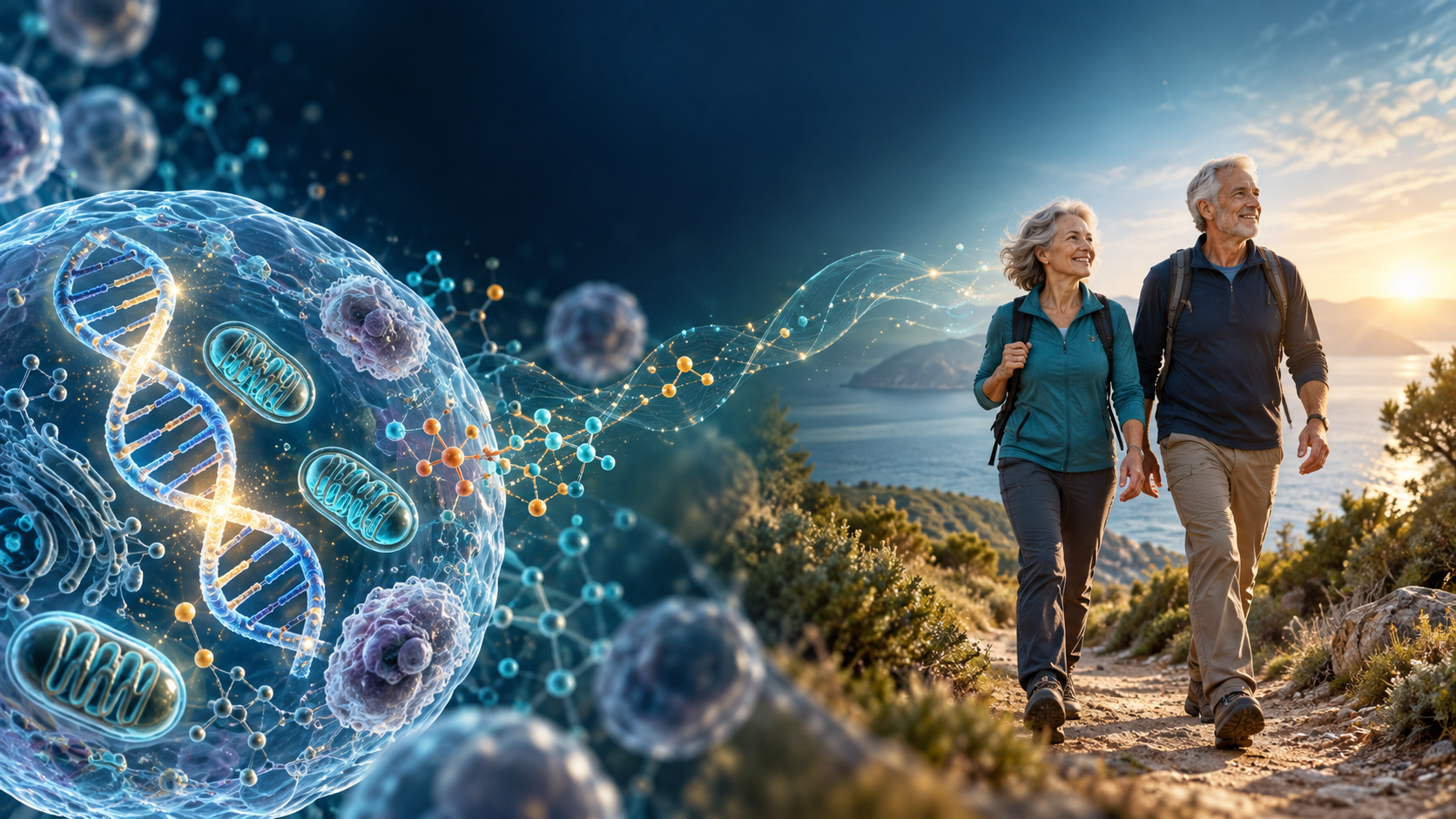
What if myocardial infarction, type 2 diabetes, dementia, osteoporosis, and certain malignant diseases are not entirely separate health problems, but different clinical consequences of partially shared biological processes?
This question lies at the heart of geroscience — an interdisciplinary field that studies the connection between the biology of aging, the loss of physiological resilience, and the development of chronic disease.
Classical medicine is organized primarily around individual organs and diagnoses. The cardiologist treats cardiovascular disease, the endocrinologist metabolic disorders, the neurologist neurodegenerative conditions, and the oncologist malignant disease. This approach is necessary and remains the foundation of clinical practice, but it often begins only once a disease has already become clinically recognizable.
Geroscience introduces an additional question: which biological processes, over the years, preceded the onset of disease? The goal is not to replace existing specialties, but to better understand the shared mechanisms that increase the body's susceptibility to a range of diseases.
Aging as a Central Risk Factor
When we talk about disease prevention, we most often consider smoking, hypertension, dyslipidemia, obesity, impaired glucose metabolism, physical inactivity, diet quality, and family history. For a large number of chronic diseases, however, there is another extremely important, non-modifiable risk factor — age.
With age, the incidence rises of cardiovascular disease, type 2 diabetes, neurodegenerative conditions, osteoporosis and loss of muscle mass, immune dysfunction, certain malignant diseases, as well as multimorbidity and functional dependence. Geroscience therefore does not view aging simply as the passage of time — it studies the changes that accumulate over time in the body's cells, tissues, and regulatory systems. In other words, what matters is not only how many years we have, but also how our body has aged through those years.
Chronological and Biological Age Are Not the Same
Two people can have the same date of birth but very different functional capacity, metabolic health, and resilience to stressors. One 75-year-old may be physically active, independent, and cognitively intact. Another person may already, at 60, have several chronic diseases, reduced muscle strength, disturbed sleep, and significantly limited mobility. The difference can be partly explained by the concept of biological age — chronological age is the time elapsed since birth, while biological age attempts to describe the body's condition and functional capacity relative to the changes expected with aging.
Biological aging is influenced by numerous interconnected factors: genetic predispositions, epigenetic changes, metabolic health, body composition and muscle mass, physical activity, diet, sleep quality and continuity, chronic stress, exposure to tobacco, alcohol, and pollution, infections, disease and medications, as well as social environment and psychological resilience. Biological age is therefore not a single laboratory value — it is a complex concept assessed by combining clinical, functional, and, in certain circumstances, molecular indicators.
What Changes in the Body During Aging?
Aging is not simply the body "wearing out." Modern biology describes it as a network of interconnected processes that gradually reduce the ability to maintain homeostasis, regenerate, and respond to stress. The current concept of the "hallmarks of aging" encompasses 12 interconnected mechanisms, among which the following processes stand out in particular.
Genomic Instability
DNA is exposed every day to metabolic, oxidative, and external damage. The body has systems for detecting and repairing this damage, but their efficiency can decline with age, and the accumulation of damage can affect cell function, tissue regeneration, and the risk of developing disease.
Epigenetic Changes
Epigenetic mechanisms regulate which genes are active and which are silenced, without changing the DNA sequence itself. Aging is associated with changes in these regulatory patterns, which, in addition to genetics, can be influenced by diet, physical activity, sleep, and stress.
Loss of Proteostasis
Cells must properly produce, fold, repair, and remove proteins. With aging, quality control becomes less efficient, which can lead to the accumulation of damaged proteins — a process particularly important in the study of neurodegenerative diseases.
Reduced Autophagy
Autophagy is one of the basic systems of cellular maintenance and recycling. Its weakening contributes to the accumulation of cellular "waste" and a decline in the cell's functional efficiency.
Mitochondrial Dysfunction
Mitochondria take part in energy production, the regulation of oxidative stress, cell signaling, and programmed cell death. Their dysfunction can be associated with lower energy efficiency and reduced tissue function — although subjective fatigue is not a specific indicator and requires a broader clinical evaluation.
Cellular Senescence
Senescent cells permanently stop dividing but remain metabolically active, playing an important role in wound healing. The problem arises when, with age, they accumulate excessively and release signaling molecules that promote inflammation — which is why they are popularly called "zombie cells."
Chronic Inflammation
Aging is often accompanied by long-term, mild systemic inflammation known as inflammaging, which can exist without pronounced symptoms and contribute to tissue damage and the development of disease.
Dysbiosis
The gut microbiome takes part in regulating metabolism, the immune system, and the integrity of the gut barrier. Changes in its composition can accompany aging, but test results should be interpreted in the context of symptoms, diet, and overall health status.
From Treating Individual Diseases to Preserving Resilience
The traditional clinical model most often follows this path: symptoms → diagnosis → therapy. Geroscience adds an earlier stage: biological aging → loss of resilience → impaired function → disease.
This model does not mean that every disease can be prevented, or that aging is its sole cause. The key value of the geroscience approach lies in its attempt to identify shared mechanisms of vulnerability before multiple different diagnoses appear — this can be compared to maintaining a house's foundation, rather than only patching each new crack that appears in the walls.
Can We Slow Biological Aging?
This is one of the most intensively researched questions in modern biomedicine. Laboratory and early clinical studies are examining various approaches, including modulation of the pathways that sense nutrient availability, senolytics and senomorphics, metformin, rapamycin and its derivatives, NAD⁺ precursors, regenerative medicine, gene and cell therapies, and partial cellular reprogramming.
It is very important to distinguish between an interesting biological mechanism, results in experimental models, and proven clinical benefit in humans. At present there is no approved therapy that stops or reverses the entire process of human aging, which is why using medications or experimental protocols outside recognized indications requires particular caution and appropriate medical supervision.
What Has the Most Evidence Today?
The most reliable interventions for preserving function and reducing the risk of chronic disease are not exotic — their strength lies in consistent, long-term application.
- Regular physical activity: a combination of aerobic activity, strength training, balance exercises, and everyday movement.
- Preserving muscle mass and strength — muscle is metabolically active tissue that participates in glucose regulation.
- A high-quality, individually tailored diet modeled on the Mediterranean pattern.
- Quality sleep and a preserved circadian rhythm.
- Managing chronic stress.
- Prevention and control of known risk factors: blood pressure, blood glucose, lipids, body weight, vaccinations, and recommended screenings.
Where Do Genetics and Functional Medicine Fit In?
Genetic analysis can help identify certain inherited variants and predispositions that influence metabolism, drug response, or the risk of specific diseases. A genetic predisposition, however, is not the same as a diagnosis — its clinical value depends on the quality of the test, the strength of the scientific evidence, and how the result changes a medical decision.
Functional and other specialized analyses can, in properly selected situations, provide additional insight into hormonal patterns, the stress response and the daily cortisol rhythm, the metabolism of certain hormones, nutritional and metabolic status, and microbiome composition. Their greatest value exists when they answer a clearly defined clinical question and when their result can change a decision about further assessment, monitoring, or intervention.
The Medicine of the Coming Decades
Geroscience does not promise immortality. Its goal is more realistic and more medically important: to delay the onset of disease, reduce the amount of life spent with disability and multimorbidity, preserve physical and cognitive function, extend the healthy lifespan — healthspan — and enable people to remain active, functional, and independent for as long as possible.
The medicine of the future will therefore not be focused solely on the question "What disease does the patient have?" It will increasingly also ask: "Why has their body become susceptible to disease?" and "Which intervention has the greatest likelihood of preserving function and quality of life?"
Conclusion
The most important message of geroscience is not that we can stop time. The most important message is that the way we age is not determined by time alone.
Geroscience represents an important shift in how we think about aging and chronic disease. Rather than viewing aging as a single disease or an inevitable decline of all functions, it studies the interconnected biological processes that increase the body's vulnerability over time. The goal is not to search for a single "anti-aging pill," but to understand the biology, recognize risk early, and choose safe, evidence-based interventions.
Lifespan matters. But function, independence, and the quality of the years we live represent the true goal of longevity medicine.
Note: This text is educational in nature and does not constitute individual medical advice. Laboratory, genetic, and functional testing, as well as the use of medications and supplements, should be planned on the basis of an individual clinical assessment and in collaboration with an appropriately qualified healthcare professional.
Sources
- López-Otín C, Blasco MA, Partridge L, Serrano M, Kroemer G. Hallmarks of Aging: An Expanding Universe. Cell. 2023;186:243–278.
- Kennedy BK, Berger SL, Brunet A, et al. Geroscience: Linking Aging to Chronic Disease. Cell. 2014;159:709–713.
- Sierra F. The Emergence of Geroscience as an Interdisciplinary Approach to the Enhancement of Health Span and Life Span. Cold Spring Harbor Perspectives in Medicine. 2016.
- Moqri M, Herzog C, Poganik JR, et al. Biomarkers of Aging for the Identification and Evaluation of Longevity Interventions. Cell. 2023;186:3758–3775.